Top 10 Most Unique Bearded Animals in the World

The trend of men growing beards in recent years has made women fascinated by their masculinity. However, few people know that there are many animals that look "worldly" and much more interesting if they have a beard. We would like to introduce to you a selected article about animals with beards that are "as beautiful as" men.

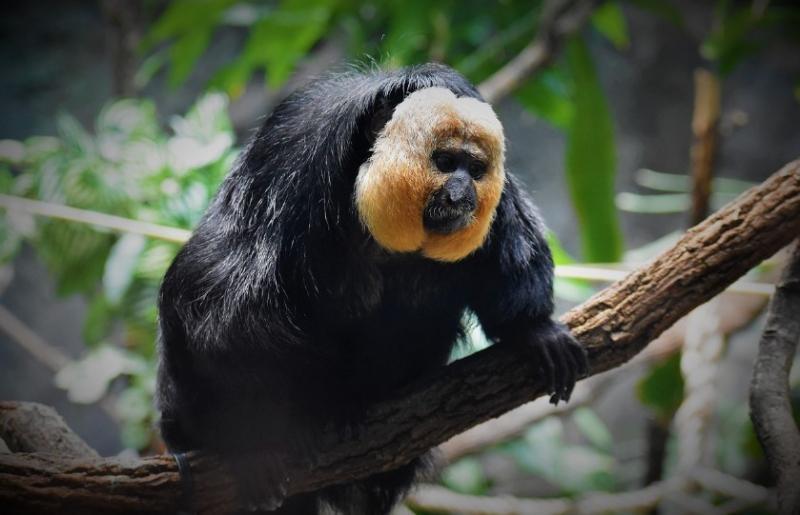
1. Saki's bearded monkey

The Saki bearded monkey, or Chiropotes, is a primate with one of the largest beards in the animal kingdom. Its whiskers are thick and extend from its lower jaw to its chest. These monkeys, with their distinctive white mustaches, were once a separate species more than a hundred years ago. After being mistakenly merged with another group of monkeys, they have now been recognized as a separate species by the scientific community.

The newly recognized bearded primate group lives in the Blue Nile basin of western Ethiopia and near Sudan, and is geographically separated from other patas monkeys by the Sudanese Sudd wetlands and the Ethiopian highlands. Their faces and noses are black and they lack the characteristic line between their ears and eyes that other patas monkeys have.

“The basic concept of the genus Erythrocebus has not changed in around 100 years, and the discovery of a distinct species living in eastern Sudan and western Ethiopia will highlight this little-known part of Africa, providing opportunities for new conservation projects in the region,” said Mr Gippoliti. “There is remarkable diversity in these remarkable primates. Only through this kind of careful study can we gain a proper understanding of their diversity so that we can better protect them from the threats they face.” Several other discoveries are described in the same issue of Primate Conservation, including a new lemur from Madagascar, two new tasier monkeys from Indonesia, and two new subspecies of slender loris from Sri Lanka.
View Details

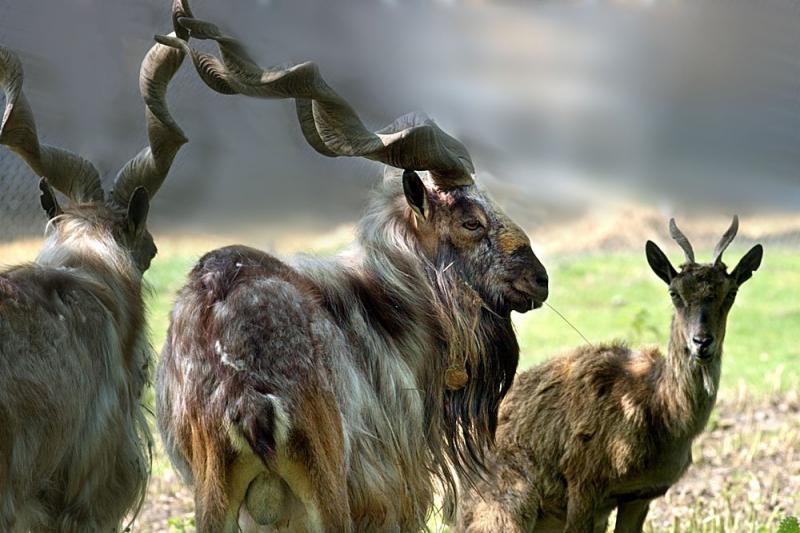
2. Markhor Mountain Goat

The Markhor is known as the national animal of Pakistan and is a wild antelope native to South Central Asia. The Markhor has horns with whiskers that grow from the chin, down the neck, and down to the chest.

The coat of the Markhor varies in color and length with the seasons. In the summer, the coat is light brown, gray, or grayish-red, with fine, short hair. In the cold winter, the coat turns grayer, grows thicker, and is longer. The underbelly hair is white. The hair on the shins is black and white. The Markhor is sexually dimorphic, with males having a white or dark mane (like a horse or lion's mane) that hangs down over the chin, neck, chest, and shins. Females have short, reddish-red hair, are slender, have a short black beard, and have no mane.

Like many other wild goats, the Markhor is a skillful and agile climber, able to stand on steep cliffs; it can even jump over rocky terrain with ease. The Markhor is adapted to mountainous terrain, found between 600 and 3,600 meters above sea level, depending on the season, living at higher altitudes in summer and lower altitudes in winter. This species usually lives in scrub forests, mainly growing oak (Quercus ilex), pine (Pinus gerardiana), juniper (Juniperus macropoda). The Markhor is also adapted to dry cliffs, steep gorges in the sparsely wooded mountains of the western Himalayas in Central Asia.

In summer, the Markhor usually rests in open places, in the shade of mountains or under small bushes, it never rests on rocks or flat areas. The Markhor usually rests on hot days. In winter, the Markhor usually travels about 2–5 km daily, to the southern slopes or warmer areas of the mountain. To avoid deep, heavy snow and glaciers at high altitudes, the Markhor will take shelter under rock arches near the foot of the cliffs, shelters that often have good visibility.

This is a diurnal species, active all day, peaking in the early morning and late afternoon.
View Details


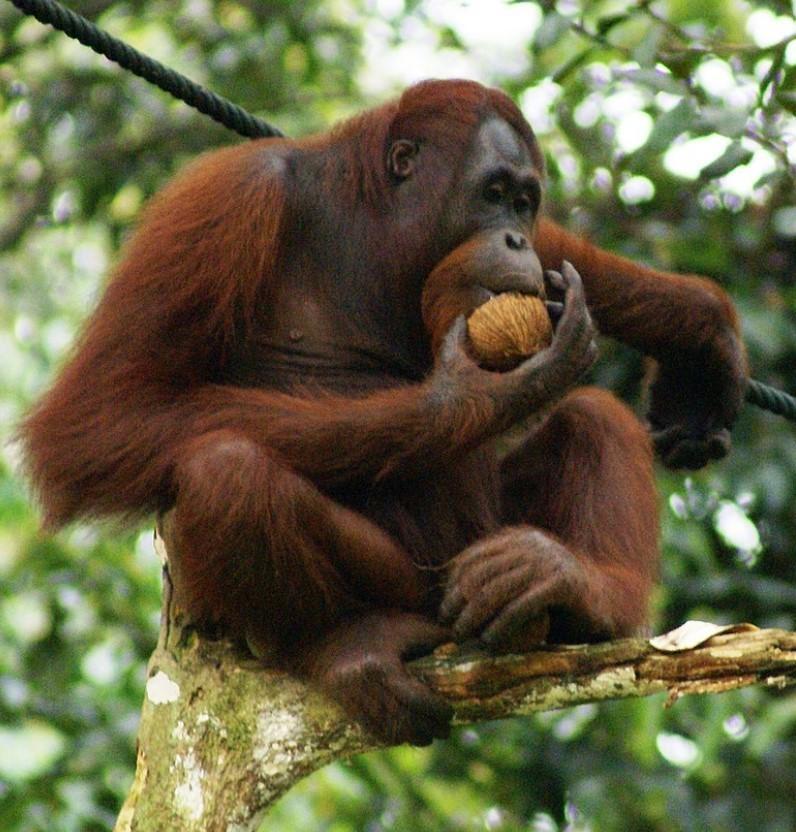
3. Orangutan

The orangutan (wild man/forest man) is an extant primate species in Asia, this hominid animal has a beard that covers its face from the nostrils to the chin, and is also quite eye-catching yellow.

Orangutans show very clear sexual dimorphism; females stand 115 cm (3 ft 9 in) tall and weigh about 37 kg (82 lb) when standing, while adult males stand 137 cm (4 ft 6 in) tall and weigh about 75 kg (165 lb). The arm span of a male orangutan can reach about 2 m (6.6 ft), which is very long compared to the body. In contrast, their legs are relatively short. Their fur is rough and covers most of their body, usually red, bright orange or dark brown. Their skin is grayish-black. Some, but not all, male orangutans grow beards on their chins.

The ears and nose of orangutans are quite small; they lack earlobes (the hanging part of the ear, not to be confused with earwax). The average intracranial volume of orangutans is 397 cm3. The cranial cap of orangutans is high compared to the concave face with a prominent jaw. Compared to chimpanzees and gorillas, the brow ridge of orangutans is poorly developed. Young and female orangutans have a round skull with a thin face, while adult males have a prominent sagittal crest, large cheek pads, large throat pouches, and long canines. The cheek pads of orangutans are composed mainly of fatty tissue, supported by the facial musculature.
View Details

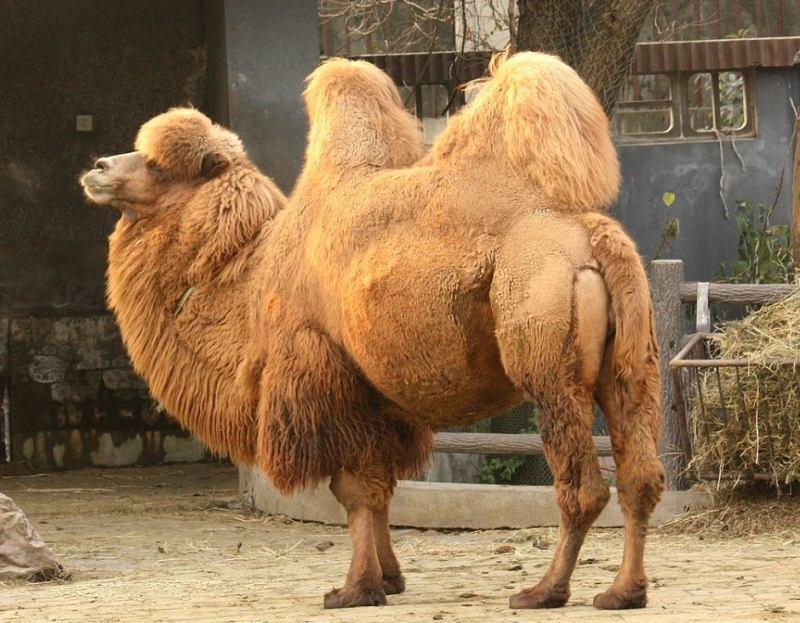
4. Bactrian camel

Native to the steppes of East Asia, the camel shows off its weathered appearance with its long, unkempt beard, which can grow up to 25 cm long.

Adult camels stand over 2 meters (7 ft) tall from the hump down and weigh over 725 kg (1,600 pounds). They are herbivores, eating grasses, leaves, and grains and can drink up to 120 liters (32 US gallons) of water at a time. Their mouths are strong enough to allow them to eat thorny desert plants.

They are physically adapted to life in the desert (very hot during the day, very cold at night, and stormy, sandy winds); they have large legs and very thick skin on the knees and chest, nostrils that can open and close, eyes protected by thick fur, bushy eyebrows, and two rows of long eyelashes. Their thick skin and body hair keep them warm during the cold desert nights and insulate them during the hot, dry days.

The dromedary (Camelus dromedarius) is the only other living camel species, native to the Sahara, but today the dromedary is no longer found in the wild. Compared to them, the dromedary has a more sturdy build, better able to withstand the hot desert summers of northern Iran and the frigid winters of Tibet. The dromedary is taller and faster, and when ridden can travel at speeds of 13–15 km/h (8–9 mph), while the dromedary can only travel at around 4 km/h (2.5 mph) when ridden.
View Details

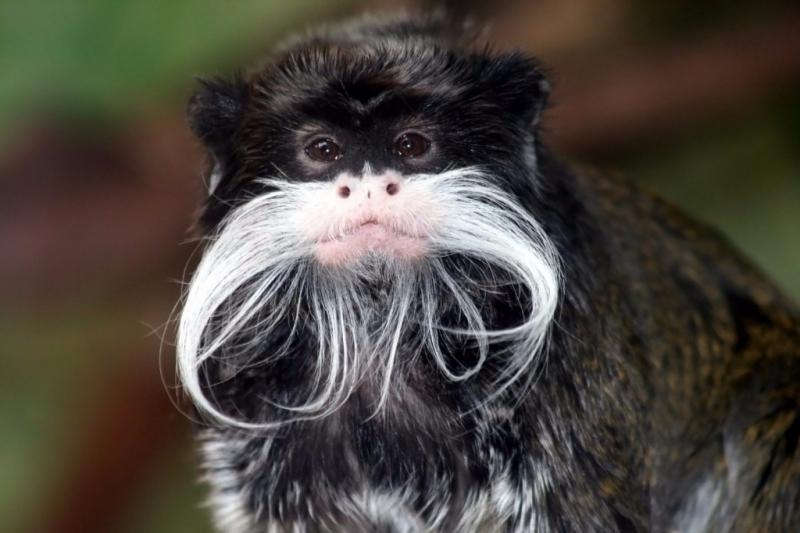
5. Saguinus imperator

The Saguinus imperator (or Prince Tamarin) lives in the southwestern Amazon basin. Despite living in a hot and humid South American climate, this is probably the primate with the most “badass” beard. Saguinus imperator is a mammal in the family Callitrichidae, order Primates. It was described by Goeldi in 1907. It lives in the southwestern Amazon basin, in eastern Peru, northern Bolivia, and in the western Brazilian states of Acre and Amazonas.

Their fur is mainly gray, with yellow spots on the chest. Their hands and feet are black, and their tail is brown. They are distinguished by long white whiskers that extend on both sides of their faces and past their shoulders. They reach a length of 23–26 centimetres (9–10 in), plus a 35–41.5 cm (13.8–16.3 in) tail. It weighs about 300-400 grams (11-14 oz).

Saguinus imperator is a genus of squirrel-sized New World monkeys in the family Callitrichidae. They differ from Old World monkeys in many ways, most notably in their distinctive nasal phenotype, a feature often used to distinguish the two groups. New World monkeys have much flatter noses than the narrow noses of Old World monkeys, and their nostrils point laterally. Some New World monkeys have prehensile tails, in contrast to Old World monkeys.

New World monkeys (except howler monkeys of the genus Alouatta) do not have the trichromatic vision of Old World monkeys. Color vision in New World monkeys is based on a single gene on the X chromosome that produces pigments that absorb medium-long wavelength light, as opposed to short wavelength light.
View Details

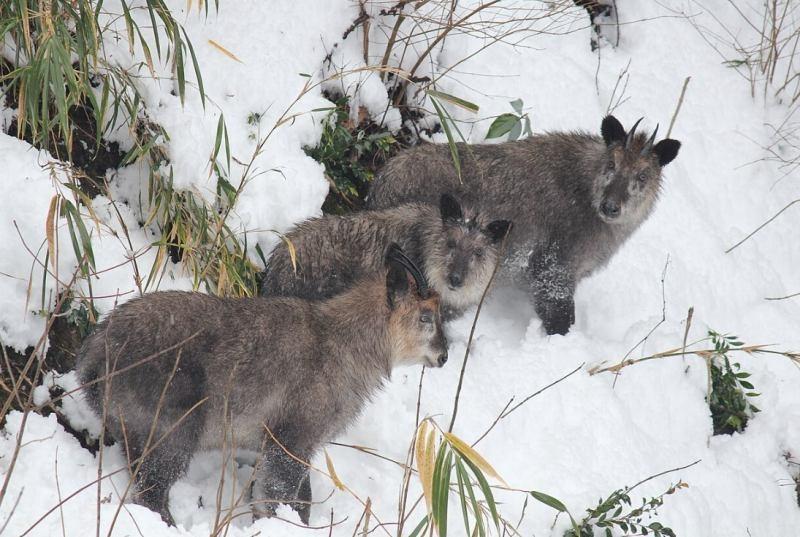
6. Japanese Serow

A half-goat, half-antelope animal of the family Bovidae, it is considered the national symbol of Japan. Adult Japanese serows stand about 81 cm tall and weigh 30–45 kg. They have a fairly long, bushy beard to cope with the harsh weather of the land of the rising sun. The hair is pale white around the neck, the body is black, with many white spots on the back, some serows are dark brown or whitish; the hair is lighter in summer. There are three well-developed skin glands: the preorbital gland, which is large in both males and females, increasing in size with age; the scent glands, which are poorly developed on all four legs, and the gonadal gland.

Sexual dimorphism is not strong; body size, growth, survival rate, and feeding habits show little difference. Both males and females have short, backward-curving horns, which are about 12–16 cm (4.7–6.3 in) long; The horn sheath has a series of transverse rings. The horns begin to grow when the serow is about four months old and continue to grow throughout its lifespan.

The environment influences the size of the first growth ring. The size, curvature, thickness, and number of transverse rings are indicators of age. At two years of age, the transverse rings on the horn sheath are thicker, longer, and more curved in adults; as they reach adulthood, thinner horn rings force the transverse rings to thicken. Females grow more slowly at an earlier age than males. Researchers rely on genitalia and sexual behavior to distinguish between males and females. Female serows have two pairs of breasts.

Serows have sensitive hearing and strong eyesight, allowing them to detect and react to sounds from a distance, and they can also see clearly in dim light. Thanks to their good sense of smell, serows can observe when they lift their heads and sniff the surrounding air.
View Details

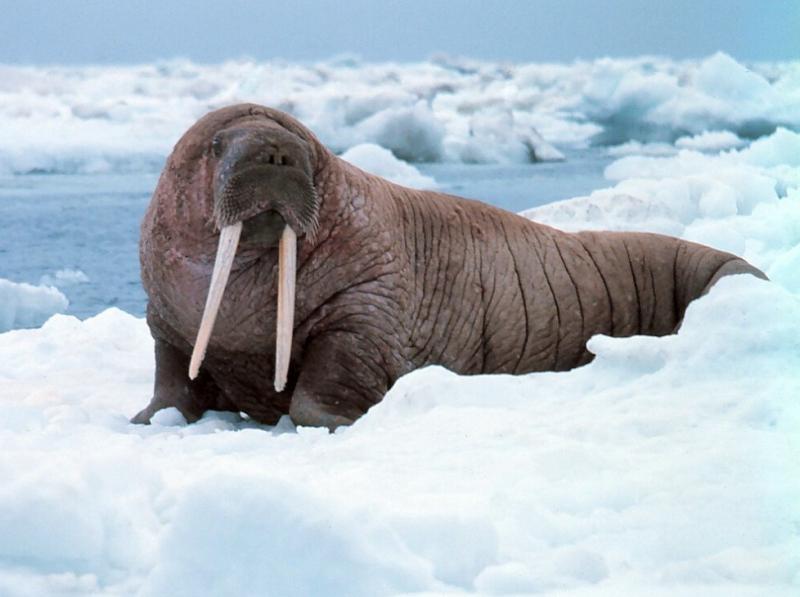
7. Walrus

The walrus (also known as walrus, sea elephant, sea elephant) is a brother from the Arctic, but it seems that Mother Nature does not give it the same beauty as its land brother. They have sparse beards on their faces. These beards are closely related to blood vessels and nerves, so they are very sensitive. Adult walruses are easily recognized by their two characteristic tusks and beards.

Adult males can weigh more than 1,700 kg. Walruses live mainly in shallow waters on the continental shelf, on ice floes and forage in shallow sea areas. Walruses have a fairly long life span, live in herds and are a typical species of the Arctic sea. Walruses play an important role in the lives of some Arctic peoples, providing meat, fat, skin, tusks, and bones for their lives. During the 19th to early 20th centuries, walruses were heavily hunted for their ivory and meat, causing their numbers to decline rapidly across the Arctic. Today, their numbers are slowly increasing, but threats to their habitat have caused them to become scattered.

Walruses live in shallow waters but forage in deeper waters, where there is a greater diversity of food sources. Walruses are omnivores, eating about 60 different species, including shrimp, crabs, tubeworms, soft corals, sea cucumbers, mollusks, and many others. In particular, their favorite foods are bivalves that live along the sea floor, especially clams. They use their tongue to create a vacuum in their dome-shaped mouth cavity and quickly and effectively suck the animal out of its shell.
View Details

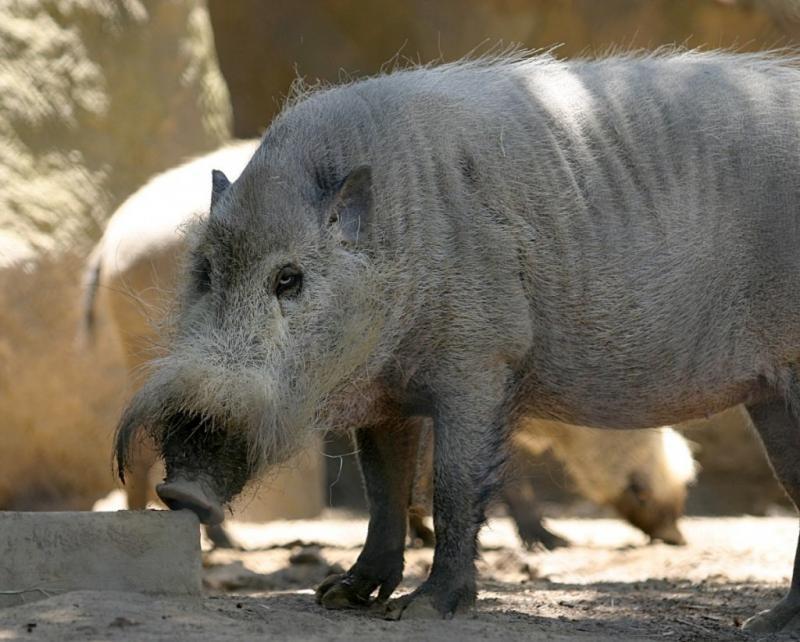
8. Borneo bearded pig

As we move towards the end of our list of “bearded” animals, we get a unique character from Southeast Asia that lives in the rainforests and mangroves. The Bornean bearded pig is constantly foraging for food, so its beard is not as beautiful as the other animals on this list. This pig has quite a lot of hair on its face. Females also have a lot of hair, but less than males.

The Bornean bearded pig, scientific name Sus barbatus, is a species of pig in the genus Pig, family Pig. It has a prominent beard, sometimes with a fringe on its tail. It is found in Southeast Asia, Sumatra, Borneo, the Malay Peninsula, and many small islands, where it lives in rainforests and mangroves.

It can reproduce from 18 months of age, and can be crossbred with other species in the family Suidae. The San Diego Zoo is the first zoo in the Western Hemisphere to breed them. As of January 2011, it is also kept at London Zoo, Hellabrunn Zoo, Gladys Porter Zoo, Lowry Park Zoo, Philadelphia Zoo, National Zoo of Malaysia (Zoo Negara), Zoo Taiping and Singapore Zoo.
View Details

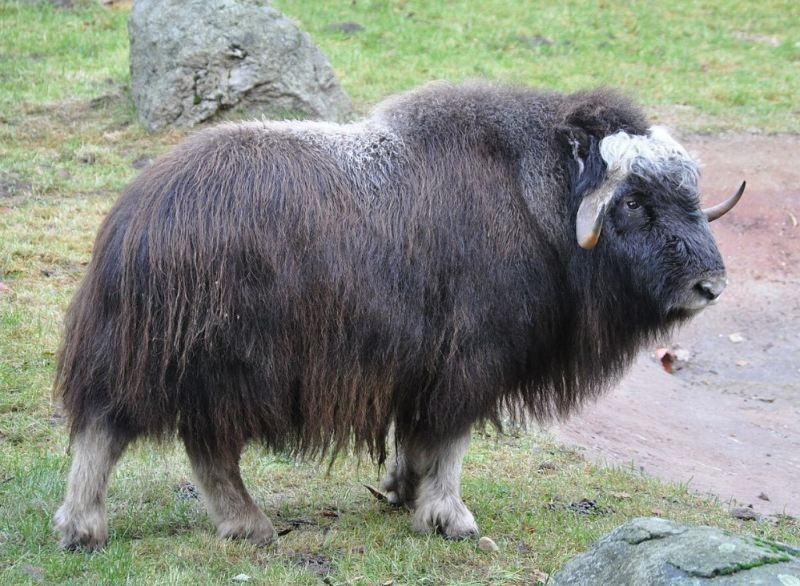
9. Musk ox

Muskoxen are native to the Arctic and are known for their large beards, which in addition to their thick fur, keep them warm in this harsh climate. They have large heads and thick fur, often compared to bison but only half the size. However, some muskoxen in zoos can weigh up to 650 kg (1,400 lb). Muskoxen have a thick double coat with a thick, grayish-black, brown outer coat that almost touches the ground and an undercoat. Thanks to their thick fur, they can withstand temperatures as low as minus 40 degrees Celsius. A few white-coated muskoxen have been found in the Queen Maud Bay Migratory Bird Sanctuary (Northern Canada). Muskoxen live in herds of 12-24 in the winter and 8-20 in the summer. The male has a dominant role in the herd, asserting his dominance in different ways. It can be by roaring, stomping on the ground, or using his horns to chase and attack a member of the herd to scare them.

The mating season of musk oxen is from June to July. A bull can mate with many females. Males in the herd can dispute over mating rights. Some males can also choose to leave the herd to find a new herd or choose to live alone, but when there is danger, he can return to the herd to fight the enemy together. The males decide the direction of the herd, but when the female in the herd is pregnant, she will decide the direction, distance and even the resting place of the herd. The gestation period of a cow is from 8 to 9 months, the calf is born from April to June and can walk after about an hour. In the first two months, they depend on the mother's milk, after which they will learn to eat plants. In years when the weather is too harsh and food sources are scarce, musk oxen will not mate anymore.

A special behavior of musk oxen is to defend against predators. When encountering predators, the herd of musk oxen will quickly move to higher areas. The strong bulls will face outward, forming a semicircle to protect the weak cows and calves inside.
View Details

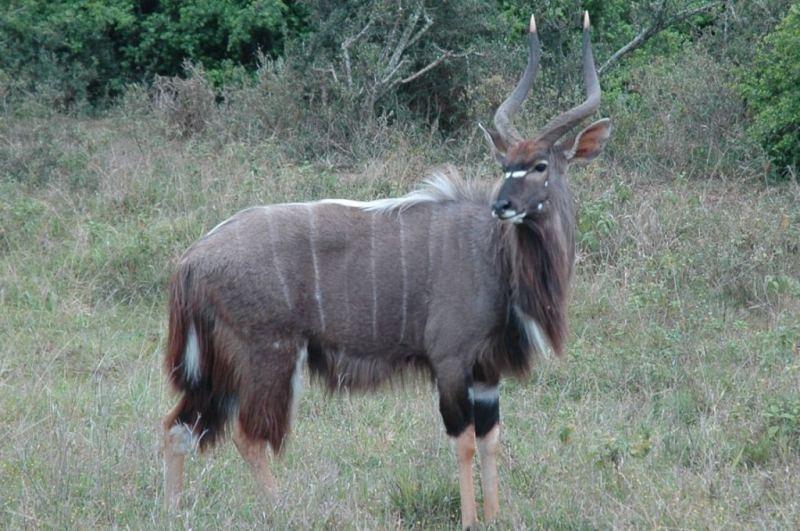
10. Nyala antelope

The Nyala antelope is a beautiful, exotic, and iconic animal of southern Africa. Its whiskers extend from its chin to its body. It is most easily recognized by the numerous white stripes that run from its backbone to its sides.

The Nyala antelope (Tragelaphus angasii) is a species of antelope in the family Bovidae, order Artiodactyla. It was described by Angas in 1848. It is native to southern Africa. It was first scientifically described in 1849 by George French Angas. It measures 135–195 cm (53–77 in) in length, and weighs 55–140 kg (121–309 lb). The coat is rusty or reddish brown in females and juveniles, but dark brown or slate grey, often tinged blue in males. Females and young males have 10 or more white stripes on their sides. Only males have horns, which are 60–83 cm long and have a yellow tip.

The species' range includes Malawi, Mozambique, South Africa, Eswatini and Zimbabwe. It has been introduced into Botswana and Namibia, and has been reintroduced into Eswatini, where it became extinct in the 1950s. Its population is stable and it is listed as a species of least concern by the International Union for Conservation of Nature (IUCN). The main threats to the species are hunting and habitat loss due to human settlement.
View Details
Like the Top 10 Most Unique Bearded Animals in the World? share me

Would you like to write a review for your company or brand?

Contact Us

promotionsand ADs

category banner
category banner
category banner