Top 10 Isolated and Mysterious Places Close to the Outside World

Despite globalization and remarkable advancements in technology and transportation, there are still places in the world that remain unexplored, forgotten, or simply off-limits. This article will introduce some fascinating locations that outsiders are not allowed to visit. From military bases to volcanic lakes and even underwater ruins, these places spark the human imagination!

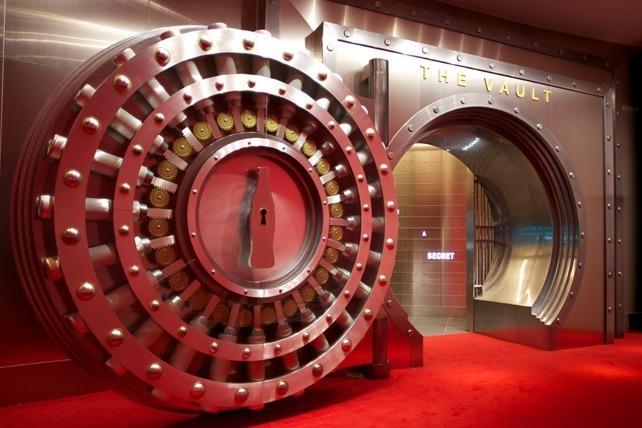
1. The basement containing Coca-Cola's secret formula, USA.

Coca-Cola is one of many popular drinks made from coca with purported medicinal properties and health benefits; early marketing materials claimed Coca-Cola soothed headaches and acted as a "brain and nerve tonic." Coca-Cola inventor John Pemberton is known to have shared his original formula with at least four people before his death in 1888. In 1919, Ernest Woodruff led a group of investors to acquire the company from Candler and his family.

As collateral for the acquisition loan, Woodruff deposited the only written copy of the Coca-Cola formula in a vault at the New York Secured Trust Company. In 1925, when the loan was repaid, Woodruff transferred the written formula to the Trust Company Bank in Atlanta. On December 8, 2011, the company placed it in a vault on the grounds of Coca-Cola World in Atlanta. According to the company, only two employees knew the complete formula at any given time, and they were not allowed to travel together. When one died, the other had to choose a successor within the company and pass the secret to that person. The identities of the two employees who possessed the secret were itself a secret.
View Details

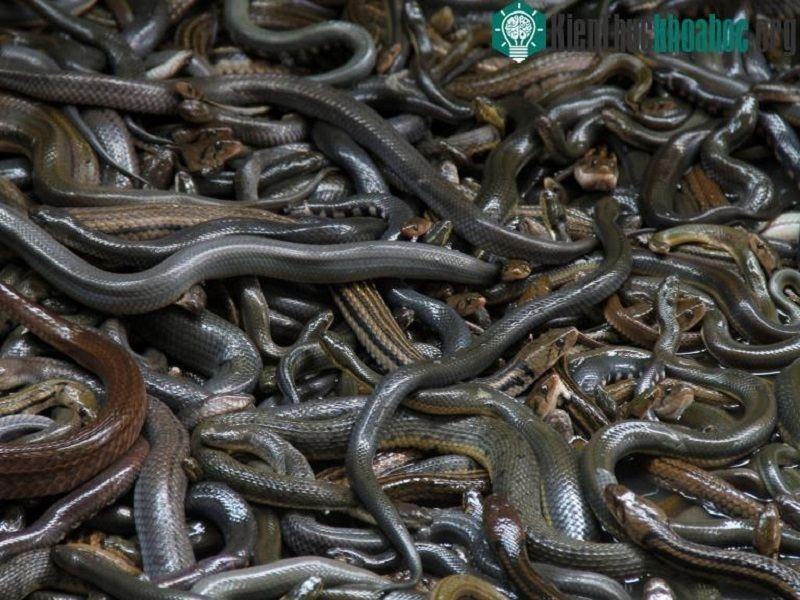
2. Queimada Grande Snake Island, Brazil

Queimada Grande, also known as Snake Island, is an island off the coast of Brazil in the Atlantic Ocean. It is administered as part of the municipality of Itanhaem in the state of São Paulo. The island is small, only 43 hectares, and has a temperate climate. The island's terrain varies considerably, from barren rocks to tropical rainforest. The island is the only natural home of the critically endangered, venomous Bothrops insularis (yellow pit viper). The snakes became trapped on the island thousands of years ago after the end of the last ice age when rising sea levels cut the island off the mainland. The subsequent evolutionary pressures allowed the snakes to adapt to the new environment, their numbers increased rapidly, and the island became dangerous for visitors.

Queimada Grande is closed to the public to protect both humans and the snake population. Access is reserved only for the Brazilian Navy and selected researchers appointed by the Chico Mendes Institute for Biodiversity Conservation. It is blocked to the public to protect human and snake life. According to some estimates, one snake per square meter should represent competition for resources. The island was previously thought to have around 430,000 snakes, but recent estimates are much lower. The island is also home to a small number of Dipsas albifrons, a non-venomous snake species.
View Details

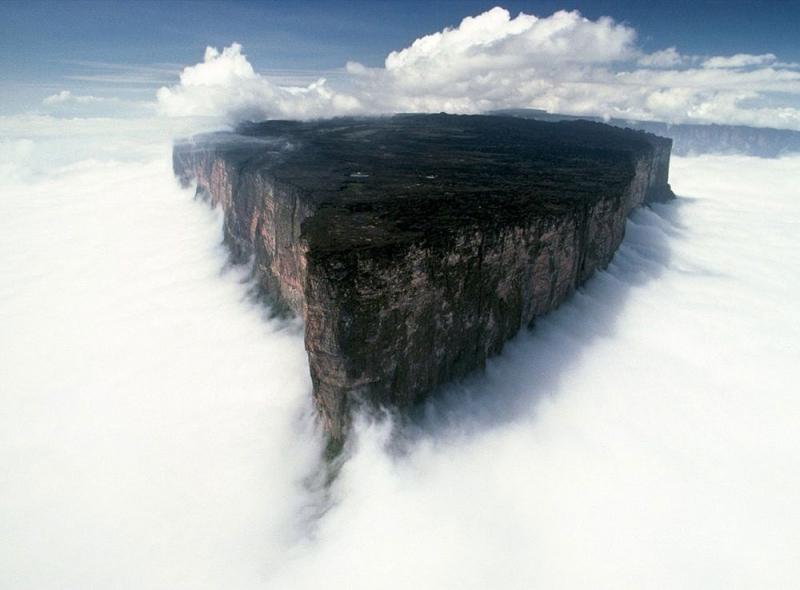
3. Mount Roraima, Venezuela

A surreal, flat-topped giant mountain is considered one of the most mysterious mountain ranges, teeming with exotic plant and animal species rarely found anywhere else on planet Earth. The highest peaks of the Pakaraima range, running between Venezuela, Brazil, and Guyana, are a sedimentary plateau bordering the Amazon River basin. Mount Roraima is one of the oldest geological formations on Earth, with its "tepuis" estimated to be over 2 billion years old. The highest tepui plateau, Mount Roraima, is renowned for its prehistoric ecosystem, sustaining plant and animal species found nowhere else in the world.

Mount Roraima is a spectacular flat-topped mountain surrounded by towering cliffs, creating an island suspended in the sky above the Gran Sabana (Great Savannah) plain, a large part of southeastern Venezuela. This mountain is the highest in the Pakaraima tepuis chain in South America. This unique, table-topped mountain is a prehistoric island. Mount Roraima is over 10km long, with a maximum width of 5km, covering an area of ​​approximately 33 to 50 square kilometers, reaching an altitude of over 2200 meters, and an average elevation of 2600–2700 meters. Its sheer cliffs make access very difficult.
View Details


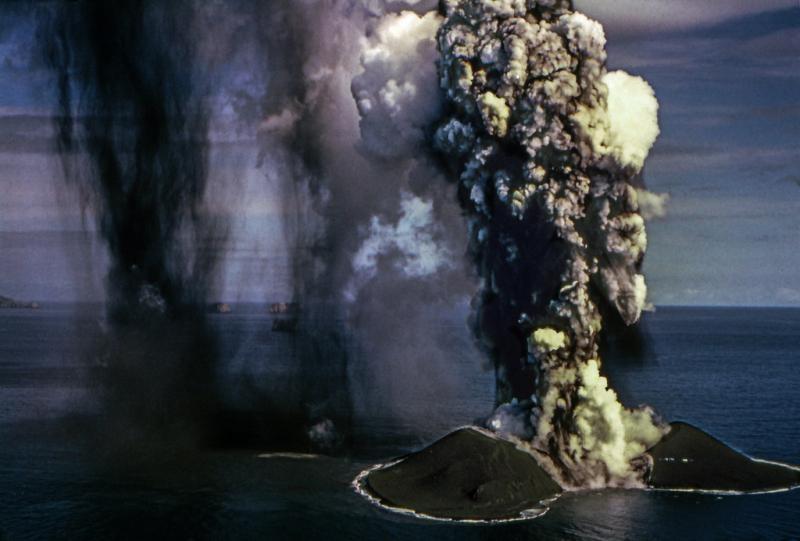
4. Surtsey volcanic island, Iceland

Named after the Norse fire god Surtur, Surtsey is one of the world's newest islands. In November 1963, Surtsey was formed by a volcanic eruption that sent it rising from the water 18 km southwest of Heimaey, 32 km off the southern coast of Iceland. When the eruption first occurred, columns of ash and dust nearly 9,146 meters high rose into the sky and could be seen on clear days as far away as Reykjavik. In 2008, Surtsey was inscribed on the UNESCO World Heritage List, as a prominent example representing important ongoing ecological and biological processes.

Surtsey is one of the most filmed and studied islands, and also one of the most restricted. Since its formation, the island's development has been studied by volcanologists, botanists, and biologists. Surtsey is providing scientists with unique and fascinating insights into how a new island develops, how flora and fauna evolve, and how life colonizes new land. Because of the need to allow natural processes to develop without human intervention, very few people are permitted to set foot on the island. Special permits are granted only for scientific research.
View Details

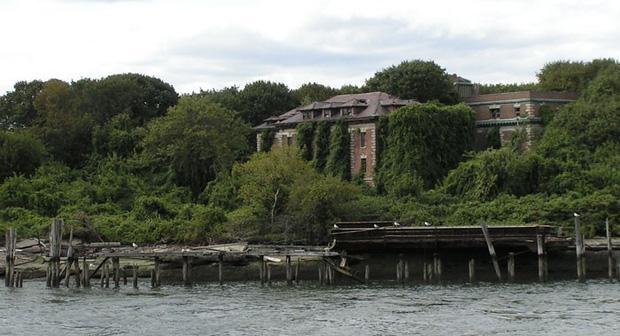
5. North Brother Island, where the isolation hospital is located, USA

The North and South Brother Islands are a pair of small islands located in the East River off New York City, between the Bronx mainland and Rikers Island. North Brother Island was once the site of Riverside Hospital. Riverside Hospital was established in the 1850s as the Smallpox Hospital, with the purpose of treating and isolating victims of the disease from the outside world. Its mission eventually expanded to other quarantineable diseases, initially typhoid, then smallpox and tuberculosis. During the polio epidemic of 1916, Riverside Hospital treated a large number of patients.

The North Brother Islands were long privately owned but were acquired by the federal government in 2007 with some funding from The Trust for Public Land and other organizations; both were subsequently given to the city. They were then designated as a sanctuary for waterbirds. The island was the site of the General Slocum shipwreck, a steamship that caught fire on June 15, 1904: 1,021 people died from the fire on board or from drowning before the ship washed ashore on the island. Now used as a sanctuary for herons and other wading birds, the island is currently abandoned and off-limits to the public.
View Details

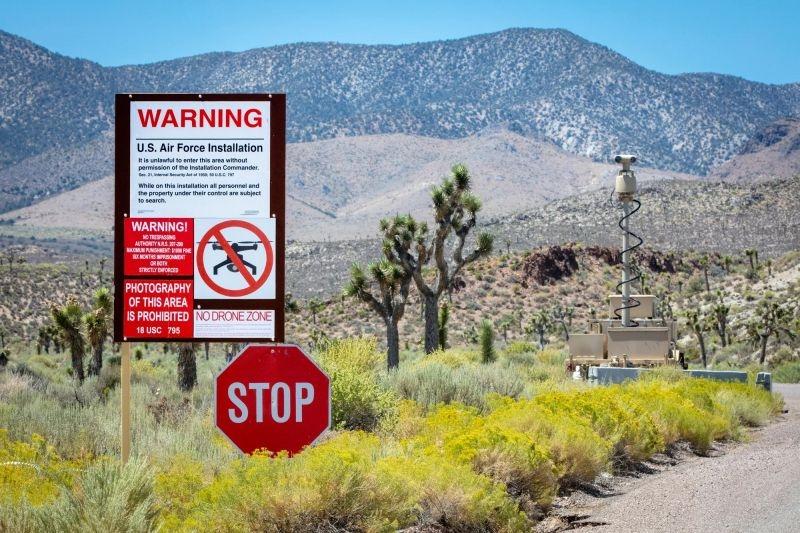
6. Area 51, USA

The Air Force base, often referred to as Area 51, located within the Nevada Test and Training Range, has captured the imaginations of both conspiracy theorists and Hollywood filmmakers for decades. Area 51 takes its name from old maps of the Nevada Test Site that literally identified the land allocation around Groom Lake as the 51st of many areas that make up the military base. This still-operational, top-secret military base is surrounded by barren desert, and the secrecy surrounding its Cold War-era stealth aircraft testing has led to rumors of UFOs and aliens, U.S. government experiments, and even a staged moon landing at the facility.

Since the 1950s, locals and visitors to this area of ​​the Silver State have spotted top-secret aircraft, built with unprecedented technology, flying at high speeds. Although it was never officially declared a “top-secret base,” Area 51 is heavily guarded and its use both on land and in the air is restricted. Other famous aircraft tested at Area 51 include the Archangel-12, the F-117 Nighthawk stealth fighter, and even the SR-71 Blackbird. Curious locals can explore the area surrounding the base, which has become a quirky tourist spot, although they are not allowed inside.
View Details

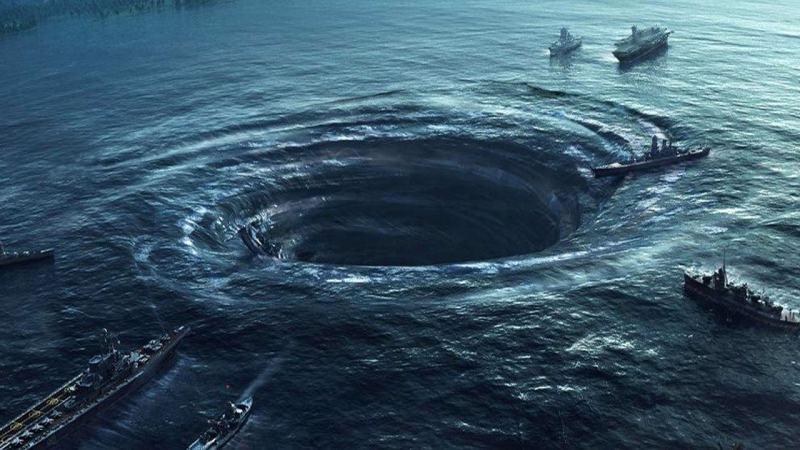
7. Bermuda Triangle, Atlantic Ocean

The Bermuda Triangle is a legendary part of the Atlantic Ocean encompassing Miami, Bermuda, and Puerto Rico, where dozens of ships and planes have disappeared. The Bermuda Triangle is perhaps the most famous mystery in the world. This area, approximately 500,000 square miles, lies in the Atlantic Ocean between Bermuda, Puerto Rico, and Miami, Florida. More than 20 planes and 50 ships are believed to have mysteriously vanished or crashed without explanation. The Bermuda Triangle has captivated the human imagination with its unexplained disappearances of ships, planes, and people.

Some speculate that mysterious and unknown forces are responsible for these unexplained disappearances, such as alien abduction for research; the influence of the lost continent of Atlantis; vortices sucking objects into other dimensions; and other fickle ideas. Although countless fantastical theories have been proposed regarding the Bermuda Triangle, none have proven that mysterious disappearances occur there more frequently than in other well-navigable areas of the ocean. The ocean has always been a mysterious place for humans, and when the weather is bad or navigation is poor, it can be a very dangerous place.
View Details

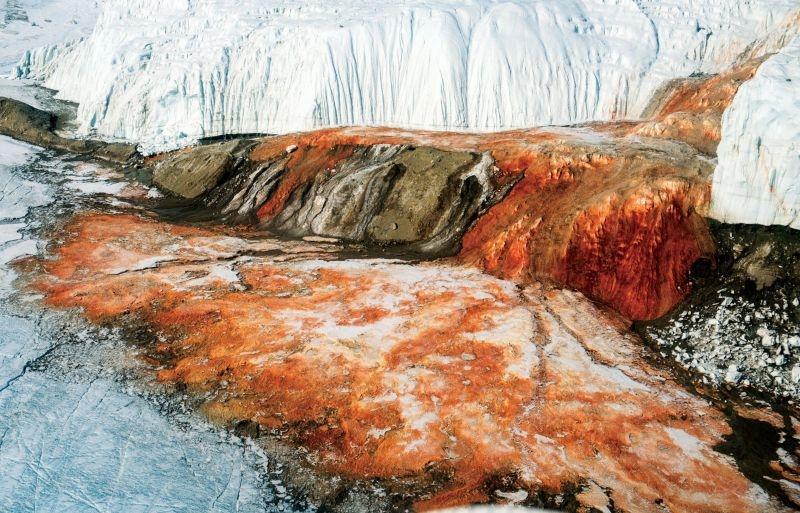
8. Blood Falls, Antarctica

Besides being the coldest and driest place on the planet, Antarctica is also home to a crimson waterfall called Blood Falls, cascading down five tiers along a white glacier. Blood Falls is a flow from the tongue of the Taylor Glacier onto the ice-covered surface of Lake West Bonney in the Taylor Valley of the McMurdo Dry Valleys in Victoria, East Antarctica. Unlike most Antarctic glaciers, the Taylor Glacier is not frozen to the bedrock, possibly due to the presence of concentrated salt from the crystallization of ancient seawater trapped beneath it.

Scientists eventually determined that the macabre color comes from iron-rich saltwater from within the glacier that oxidized and rusted upon contact with oxygen. This hypersaline, iron-rich water occasionally emerges from small cracks in the ice layers. The source of the saltwater is an unspecified subsurface lake, covered by about 400 meters of ice and snow, a few kilometers from its small outlet at Blood Falls. The red deposits were discovered in 1911 by Australian geologist Thomas Griffith Taylor, who was the first to explore the valley that bears his name. Early Antarctic pioneers initially attributed the red color to red algae, but it was later proven to be due to iron oxide.
View Details

9. Kawah Ijen Acid Lake, Indonesia

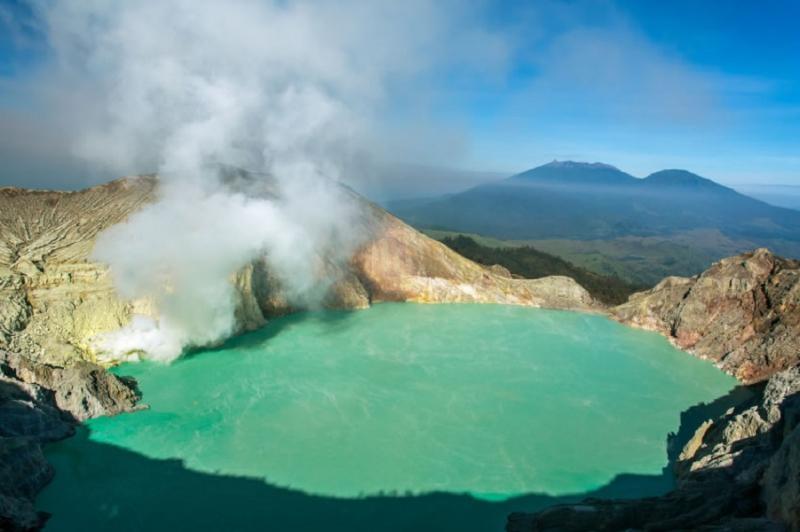
Mount Ijen is an active volcanic crater located in East Java, Indonesia. Kawah Ijen is situated near the coastal town of Banyuwangi, at the easternmost point of Java Island. The lake on Mount Ijen is the world's largest acid lake and is also famous for a bizarre phenomenon known as the 'Kawah Ijen blue flame,' where you can see a molten blue flame burning like lava in the dark! The active crater at Kawah Ijen has a diameter of 722 meters and a surface area of ​​0.41 square kilometers. It is 200 meters deep and has a volume of 36 cubic hectometers.

The Kawah Ijen acid lake is both terrifying and spectacular because of a rare natural phenomenon that occurs there. The blue flame is sulfur gas burning and erupting through the rock surfaces surrounding the lake, emerging from cracks at temperatures up to 600°C. The flames appear to burn streams of liquid sulfur, a bluish-green liquid flowing down the mountain like electric blue lava. The flames can reach up to five meters high, some of the gas condensing into a liquid, flowing down the slopes with a spectacular blue glow and remaining ablaze. Ijen is the world's largest blue flame area. Witnessing this raw demonstration of nature's power will leave you astonished; you won't be able to approach the site due to its intense heat and inherent danger.
View Details

10. Yonaguni Memorial at the bottom of the sea

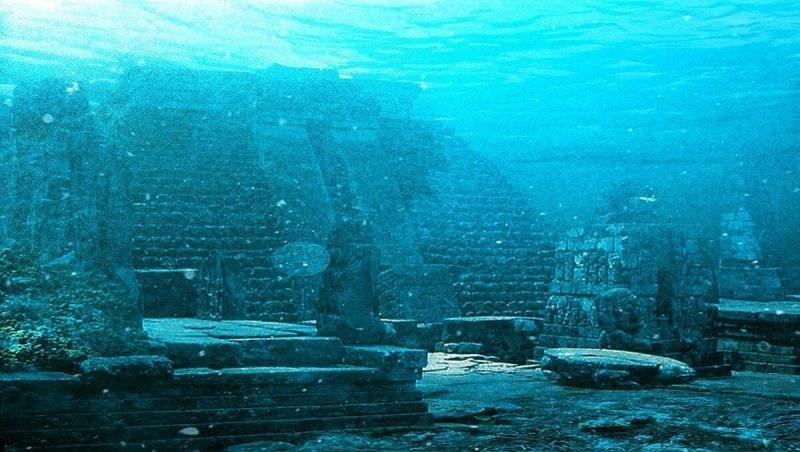
The Yonaguni Monument, or Ruins as it is sometimes called, lies at a depth of 10 to 15 meters, an area occasionally affected by strong currents. Entrance to the site is through a small tunnel opening onto a flat, square area. Immediately before you are two enormous, perfectly square columns with sharp edges, rising above the water. From here, you follow a flat 'path' around the monument's high walls to an area that resembles a terrace. Whether you believe this is a man-made structure or a natural rock formation, it is an incredible sight and a place of mystery to mankind.

Large steps lead up to the terrace of the Yonaguni Monument, and more steps lead to the higher levels of the structure. At the edge of the stage, the walls slope down about 20 meters. A little further is another almost symmetrical structure, resembling a giant turtle. The straight edges of the steps and stage have a perfect 90-degree angle. Geologists believe the rock formations are sandstone deposits. Archaeologists assert that the monument was carved from stone. But if this monument was built on land and then swallowed by the sea, it must have happened more than 10,000 years ago, the last time sea levels rose. That means it predates the Egyptian pyramids and megalithic structures like Stonehenge by about 5,000 years.
View Details
Like the Top 10 Isolated and Mysterious Places Close to the Outside World? share me

Would you like to write a review for your company or brand?

Contact Us

promotionsand ADs

category banner
category banner
category banner