Top 10 Most Terrifying Mysterious Creatures in the World

This vast world is home to many mysterious and terrifying creatures that have been sighted by people, but scientists have yet to prove their existence, or whether they are merely products of human imagination. They have become the subject of numerous science fiction films. However, despite many research projects, the question of their existence remains unanswered. We will list a few of these mysterious and terrifying creatures for everyone to know; perhaps some of us have encountered them before.

1. Dover Devil

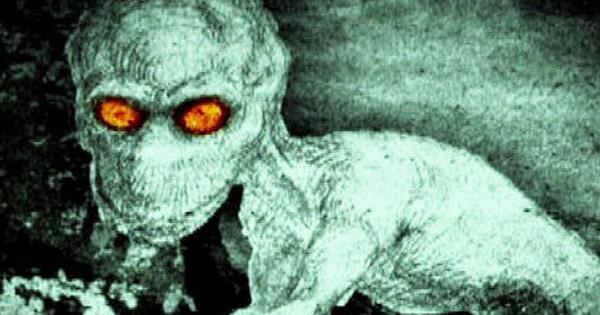
This creature is named after the town of Dover, Massachusetts, where it was sighted three times on April 21 and 22, 1977. The first sightings were by William Bartlett, 17, who spotted the creature atop a broken cliff on Fam Road in Dover. John Baxter, 15, also reported seeing it in a wooded area on Miller Hill Road that evening.

The third sighting was by Abby Brabham, 15, who confidently claimed to have seen the creature the following night on Springdale Avenue. The sighted individuals described the Dover Devil as follows: a very large head, bright orange eyes, fairly long arms, and small but long, slender legs. Its skin was hairless, rough, and brown, resembling sandpaper. Its face lacked a mouth, nose, and ears. Standing nearly 1 meter tall, it emits sounds that resemble the cries of hawks and snakes. Its appearance is also described as very similar to the aliens in science fiction films.
View Details

2. Flatwood Monster

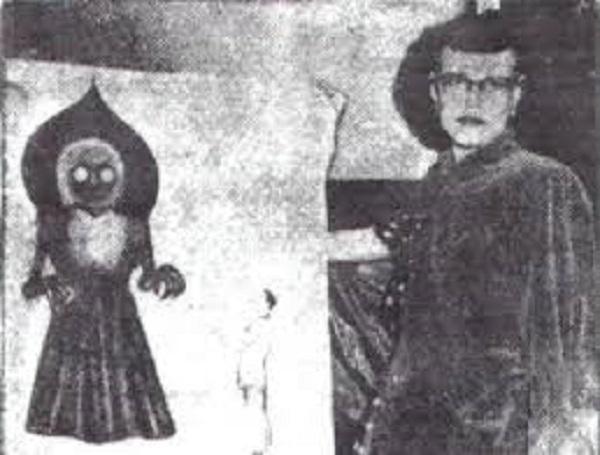
People living near the area where the creature was sighted claimed the Flatwoods Monster was one of the aliens. The location where the creature was found is very close to the site where traces of an alien spacecraft were discovered (Flatwoods, Braxton, Virginia) on September 12, 1952. According to accounts, the monster had at least ten legs, its face glowed red, and its body was entirely green. Its head was heart-shaped or resembled the ace of hearts in a deck of cards. And on this strangely shaped head, protruding eyes were not human eyes. Its body was described as human-like, wearing a dark dress. It was rumored that the monster had no arms, or if it did, they were short, thick, with long, claw-like fingers.

At 7:15 p.m. on September 12, 1952, brothers Edward and Fred May, along with several friends, witnessed a bright object streaking across the sky and crashing into a farm belonging to farmer G. Bailey. They immediately ran back to tell their mother, Kathleen May, who, along with some villagers, went to the hill to investigate what the children had seen. There, they discovered the creature. Later, several others experienced similar symptoms; those who had close contact with the creature often suffered from vomiting and convulsions. Doctors diagnosed this as exposure to chemicals that may have been present in the fog (the creature was spotted near foggy areas).
View Details

3. Mothman and the Owl Man

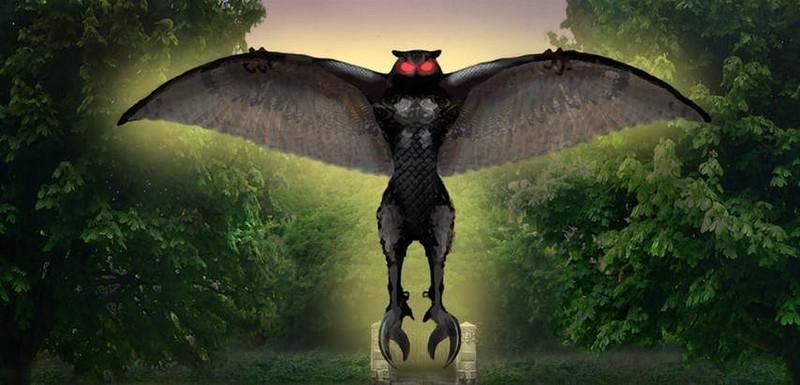
On November 12, 1966, five men digging a grave in a cemetery near Clendenin, West Virginia, claimed they saw a humanoid creature flying low from the trees above them. This was the first reported sighting of the creature, which became known as the Mothman. On November 15, 1966, a young couple moving from Point Pleasant reported to the police they had seen a white creature with glowing red eyes. It also had a human-like shape and was capable of flight. A few days later, similar sightings in the area followed. Later, a similar creature, known as the Owlman, appeared in the vicinity. In 1976, in Mawnan, Cornwall, a similar Owlman was sighted. Locals spotted the creature flying over the Mawnan church tower with a terrifying face.

Described as a creature with pointed ears, red eyes, and claws quite similar to Mothman, the Owlman, or Mawnan Owlman, Cornwall, is a bizarre creature resembling both a human and an owl that first appeared in 1976 in the village of Mawnan, Cornwall, USA. The first reported sighting was on April 17, 1976, when the creature was seen hovering over Mawnan Church, and it reappeared around the church in August 1978. Its body shares similarities with the famous Mothman, with its large, ash-colored wings. Rumors about the Owlman intensified in 1995. This strange creature resembles an owl, is human-sized, has ears, red eyes, and black claws like those of a crab.
View Details


4. Lizardmen of Scape Ore Swamp

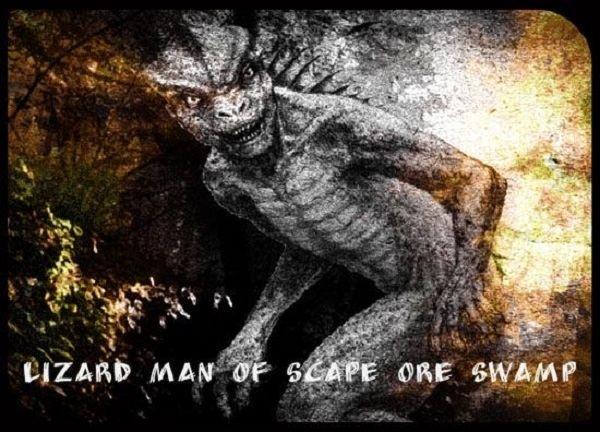
This creature was discovered in the swampy area around the town of Lee, Carolina. With its extraordinary strength, the lizard-man caused damage to vehicles it encountered. The image of the lizard-man was depicted by director Marc Webb through the character of Dr. Curt Connors, who was chemically transformed, in the film The Amazing Spider-Man. The Lizard-Man, or Scape Ore, is a bizarre, humanoid creature rumored to inhabit the swamps in and around Lee County, South Carolina, its habitat believed to be in the sewer system and abandoned subway tunnels of towns near the swamp.

It first appeared on June 29, 1988, and its most recent sighting was in February 2008. The first person to see the creature was a 17-year-old local resident named Christopher Davis. This monster is described as being about 7 feet 1 inch (approximately 2 meters) tall, bipedal, with hard, green scaly skin and glowing red eyes. It is said that the lizard-like creature has three fingers and three toes. Between its fingers and toes are webbing, allowing it to grip the ground when walking. It has lizard-like scales. Evidence of the monster's destructive power over vehicles unfortunate enough to encounter it suggests that this creature possesses extraordinary strength, capable of throwing a car around.
View Details

5. Bunyip Monster

The Bunyip is a mysterious creature from Australian Aboriginal mythology, said to live in swamps and lakes. Described as resembling a giant starfish, it can be over 30 meters tall. It has a dog-like face, horse-like ears, black fur, hippopotamus-like tusks, and paddle-like feet. It has existed since 1847, but now only exists in the records of the Aboriginal people of this region. The Bunyip is a mythical creature in Australian Aboriginal mythology, believed to lurk in swamps, canals, riverbeds, and bodies of water. The word bunyip comes from the Wemba-Wemba (or Wergaia) language of the Aboriginal peoples of southeastern Australia. However, the bunyip has become part of the traditional beliefs of Aboriginal peoples throughout Australia, although its name varies by tribe.

In his 2001 book, Robert Holden identified at least nine forms of the creature named bunyip. Many reports of the bunyip were written by Europeans in the early and mid-19th century. The Bunyip was a combination of the characteristics of a bird and an American crocodile. Its head resembled an ostrich with a long beak, at the tip of which protruded a transverse muscle on either side, and its mouth was serrated like the bones of a stingray. Its body and legs were somewhat crocodile-like. Its hind legs were very thick and strong, its front legs longer but still very strong. It had long claws on its head. Black people said that the usual method of killing its prey was to hold it down until it died. When in the water, it swam like a frog, but once on land it walked on its hind legs with its head held high, in this state it could claw 12 to 13 feet.
View Details

6. Jersey Devil

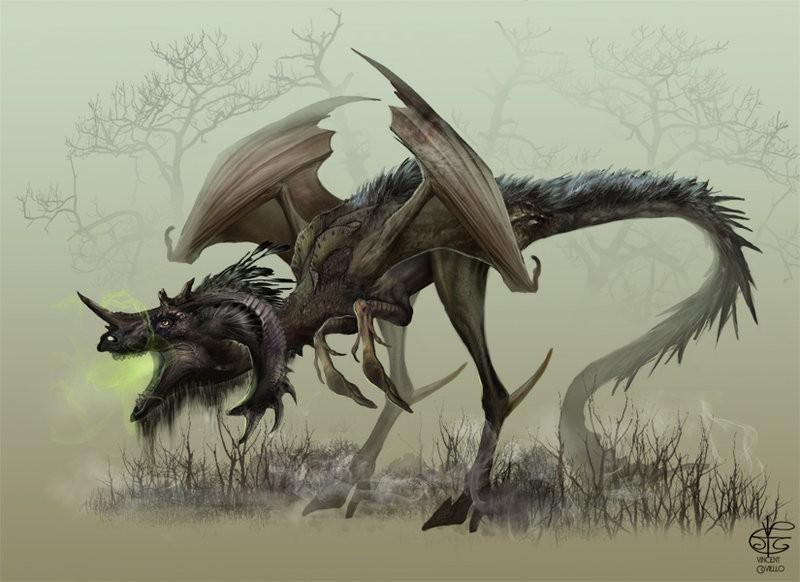
The Jersey Monster, also known as the Jersey Beast or Jersey Devil, is a mythical creature believed to have appeared in the Pine Barrens of Southern New Jersey, USA. It entered local folklore in the 1800s and continued into the 20th century. The legend of this monster originates from a story about "Mother Leeds," a local witch who summoned the demon while giving birth to her thirteenth child. Upon birth, the child was instantly transformed into a demonic creature and flew into the barren vineyards. This creature is said to appear in the Pine Barrens, New Jersey. Of all the mythical creatures in America, the Jersey Monster is considered the most ferocious and mysterious. The Jersey Devil is blamed for crop destruction, strange footprints, and terrifying noises. In the early 1900s, many people in New Jersey and surrounding areas claimed to have seen the Jersey Devil firsthand or seen traces of its appearance through strange footprints. The mystery of the Jersey Monster has been mentioned in dozens of books, films, and popular television programs around the world.

This creature is said to have originated from legends dating back to the early 1700s. According to folklore, around that time, a woman in New Jersey gave birth to a cursed monster with the head of a horse, the wings of a bat, and split hooves. Over the centuries, the story has been embellished with fantastical and fabricated details. However, according to Loren Coleman's book "The New Jersey Monster," there is no concrete evidence to prove its existence; it is merely a mythical tale. Nevertheless, the truth about this mysterious creature remains open to debate. It became a source of worry and concern for humanity as the stories and images surrounding it became increasingly mysterious and enigmatic. The Jersey Monster is described as ferocious and of mysterious origin. It is a ferocious beast, a clawed animal that can fly, with bat-like wings and a horse-like head. According to one witness, the creature was about 1.8 meters tall, had a head like a Scottish Fold dog, and a face that looked exactly like a horse's. The monster had a long neck and wings, walked on its hind legs, and had small front legs with sharp claws.
View Details

7. Sigbin Monster

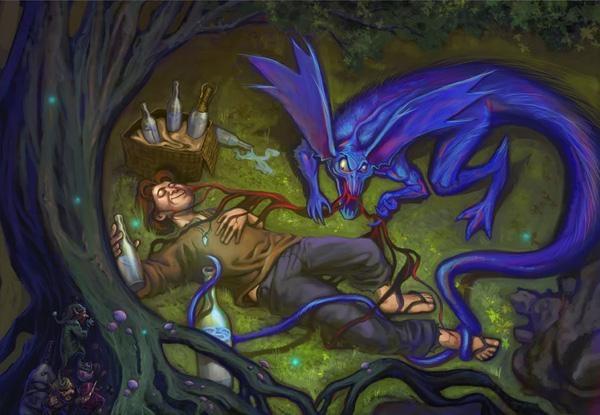
Sigbin, or Sigben, is a mythical creature in the Philippines that operates at night, sucking the blood of its victims from their shadows. The creature is described as having a peculiar gait, with its front half lowered and its rear half higher, moving backward. It is said to be invisible to other creatures. It resembles a goat, with large ears, a long, flexible tail, and a persistent, unpleasant odor. Its favorite food is the hearts of children. Based on these descriptions, in the 21st century, a creature with a similar appearance to Sigbin was discovered on Boreno Island. Known as the fox-cat, this carnivorous animal has hind legs longer than its front legs. To this day, its existence remains uncertain.

It is said that this monster walks backward with its head lowered between its hind legs, a way to avoid being detected by other creatures, especially humans. It resembles a hornless goat but has large ears that can wave like arms and a long, soft, flexible tail that functions like a whip. This monster emits a foul odor. The most common information about this creature is that its head dangles between its front limbs, which are shorter than its hind limbs. It is said to crawl sideways like a crab. The sigbin has a long, whip-like tail that emits a very unpleasant stench, and two grasshopper-like legs dangling from its neck, allowing it to jump further. But wherever it is found, the identifying features of the sigbin are its ferocious face, its long, whip-like tail, its hind legs longer than its front legs, and its constant foul smell. They usually roam around at night searching for and devouring children. They used the hearts of those children as amulets for themselves.
View Details

8. Canvey Island Monster

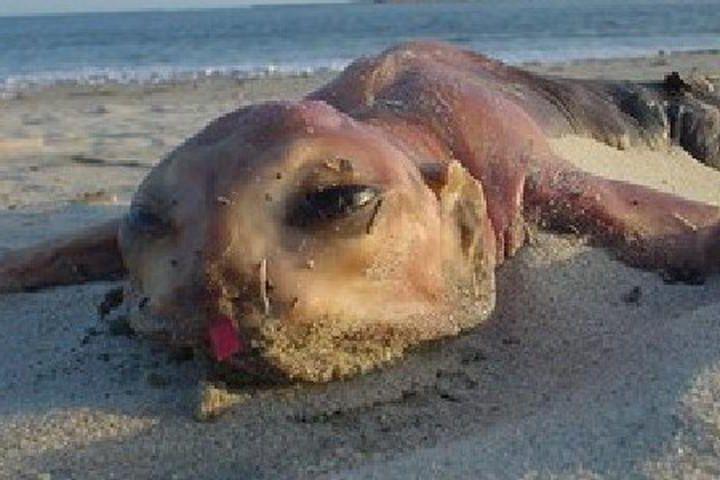
The Canvey Island Monster is the name given to a creature that washed ashore on the British island of Canvey in November 1954. Initially, locals discovered a strange animal with bizarre features and a critical condition. In August 1955, the carcass of a second, even more well-preserved creature was found. The stories surrounding the Canvey Island Monster date back to 1954 and 1955. In 1954, tests revealed it was 76 cm (2.4 ft) long, with reddish-brown skin, bulging eyes, and a drooping chin.

Its hind legs had five toes with curved, horseshoe-like edges, and the five toes were clearly U-shaped, suitable for bipedal locomotion, but its front legs were not. Its head was very soft, seemingly lacking a brain. It had large, grotesque eyes. The carcass of the monster found in 1955 was similar to the first one but larger, measuring approximately 120 cm (3.9 ft) long and weighing about 11.3 kg (25 lb). Government investigators then took the creature to a research facility and appeased the public with denials of its unusual nature. Zoologists examined the carcass, then cremated it, and declared that it posed no danger to humans.
View Details

9. Goat man

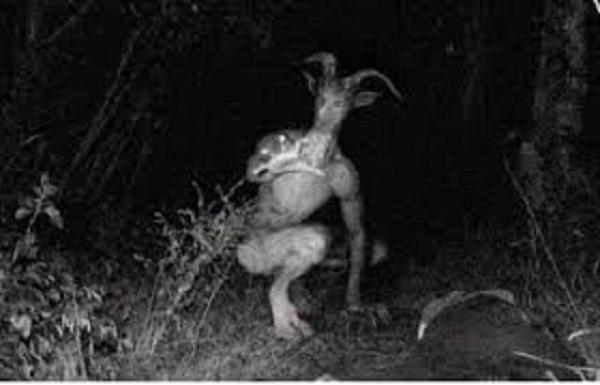
The goat-man bears similarities to humans: it has horns and claws, very similar to the image of the forest god in Greek mythology. However, studies have proven that this creature may exist in real life, with the ability to eat meat and suck blood. In 1957, a report claimed to have spotted a hairy, horned monster in Forestville, Upper Marlboro, Prince George. By 1962, this creature was accused of the deaths of 14 people, including two adults; some survived but suffered severe injuries.

Legends of the goat-man spread when strange articles were published in local Maryland newspapers. However, the creature disappeared without a trace, only to reappear in 1962 after being suspected of murdering 14 people, including two adults and 12 children, while they were hiking. According to surviving victims, the goat-man killed the unfortunate victims with an axe and made demonic sounds. One variation of the story says the goat-man was the result of a DNA experiment conducted by a scientist named Stephen Fletcher when he mixed the DNA of his assistant with the DNA of a goat.
View Details

10. Yeti the Snowman

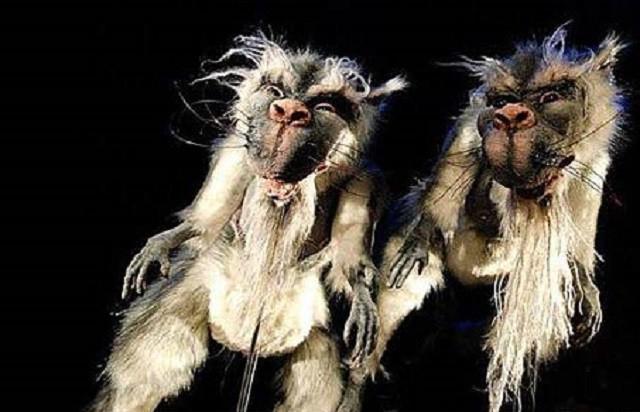
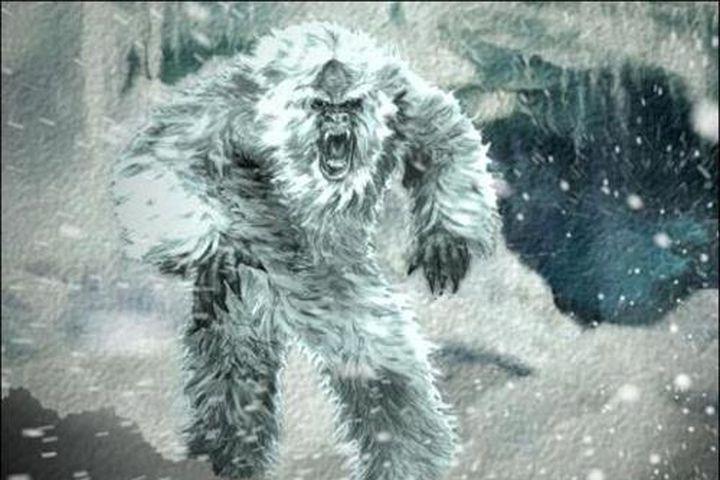
The Yeti is a mysterious, ape-like creature taller than the average human, believed to live in the Himalayan region of Nepal and Tibet. The names Yeti and Meh-Teh are commonly used by the indigenous people and are part of their mythological history. The story of the Yeti spread to the West in the 19th century. The scientific community generally considers the Yeti a myth due to a lack of conclusive evidence, but it remains one of the most famous mythical creatures. Researchers found a mitochondrial DNA sequence that matched a specimen from the jawbone of an ancient polar bear in Norway, dating back between 40,000 and 120,000 years.

Described as an ape-like creature taller than average, believed to live in the icy regions of the Himalayas and Tibet, the Yeti has been dismissed as a myth due to a lack of convincing evidence. However, the fur samples found have been identified as belonging to an ancient polar bear in Norway. There are several other specimens identified as belonging to Yetis, such as the finger that explorer Peter Byrne retrieved from the Pangbochen Buddhist monastery in 1950. They still keep the skull there. And there are many photographs documenting the existence of Yetis, such as in California (1967) and the giant footprint on Mount Everest (1951).
View Details
Like the Top 10 Most Terrifying Mysterious Creatures in the World? share me

Would you like to write a review for your company or brand?

Contact Us

promotionsand ADs

category banner
category banner
category banner