Our grandparents believe that "Three months to roll over, seven months to crawl, nine months to walk" refers to the normal developmental milestones of children. If the child is over 12 months old and still cannot walk, the mother can try to apply the following tips:
1.1. Tip to "hit" snakehead fish on the feet to help the child learn to walk quickly
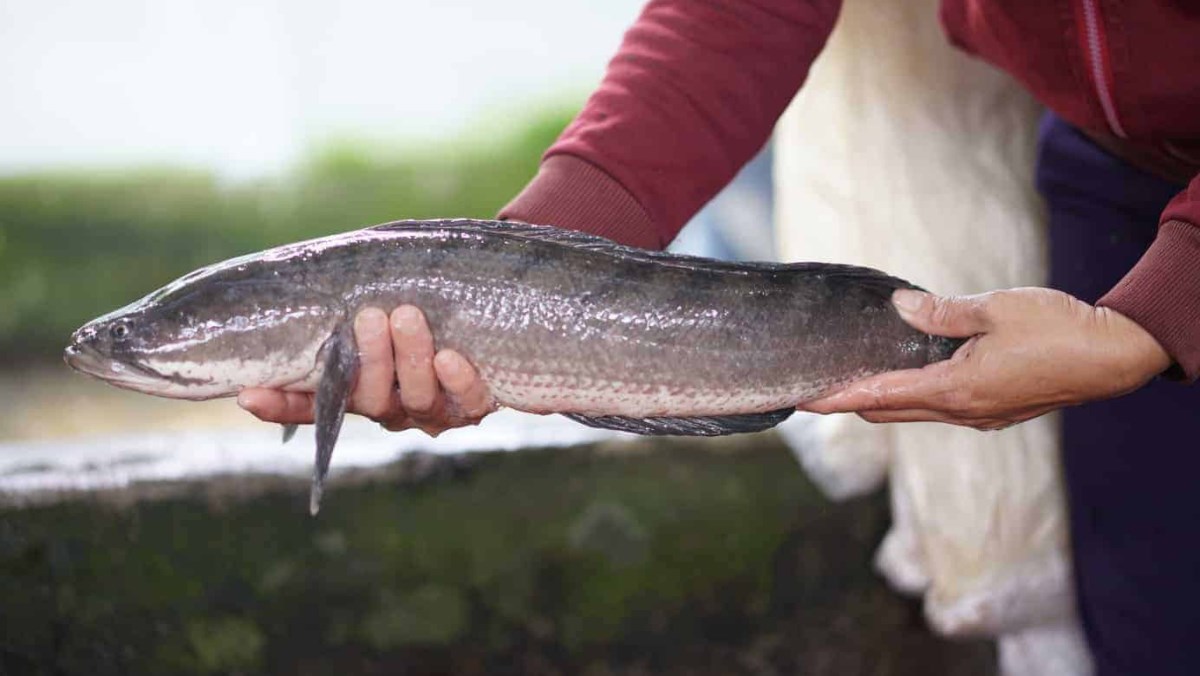
According to our grandparents, snakehead fish (or snakehead fish) is a strong fish, has good health, and is easy to live. Therefore, using snakehead fish to "perform magic" by hitting the baby's feet helps the child learn to walk quickly, stand firmly and healthily.
How to hit snakehead fish on the feet to help the child learn to walk quickly is done as follows:
The mother chooses a fish that is easy to hold, healthy and still alive. The snakehead fish needs to be bought on a good day, at a good time.
The mother uses the tail of the snakehead fish to gently tap the child's feet. For boys, the mother "performs magic" by hitting it 7 times, for girls, 9 times. This tip not only helps your child learn to walk quickly but also cures bow legs.
After beating the snakehead fish on the feet to help your child learn to walk quickly, you can use it to cook porridge or soup for your child. Snakehead fish meat contains calcium and a lot of protein, which is a delicious dish that supplements nutrition for your child.
1.2. Use betel leaves to warm your child's feet

Betel leaves are warm. According to folk beliefs, heating and bathing your child with betel leaves helps increase blood circulation. Using betel leaves to warm your child's feet helps stimulate the development of joints. This is very beneficial for children who are slow to walk.
To do this, choose 5-6 betel leaves, wash them and heat them over a fire. After the betel leaves have cooled down to a warm temperature, gently press them on your child's knees, feet, and calves, doing this 2-3 times a week.
This folk remedy has not been proven to be effective. However, there have been cases where babies have been burned, sore, and red due to irritation with betel leaves. Therefore, using betel leaves to warm their feet to stimulate their children to walk quickly is less and less used.
1.3. Choose a good day to "open the feet" for your baby to walk steadily
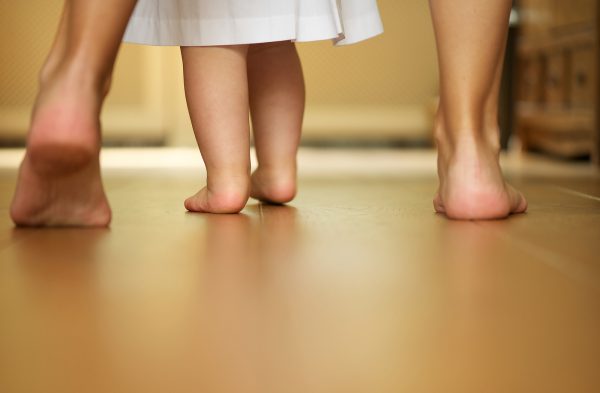
According to folklore, the starting day of important events needs to be carefully selected. With the meaning of wishing your baby to always walk steadily and everything goes smoothly, the elderly often choose a good day as the first day the baby sets foot on the ground.
Mothers can refer to the lunar calendar to find a good day, suitable for their child's age, to start letting them walk. This day will be the anniversary of their baby's first steps, as well as the beginning of their healthy and happy growth.
1.4. Massage your baby's feet and back

The feet and back are two important positions for your baby to be able to take their first steps. The legs and back must be strong for the baby to walk steadily.
According to folklore, mothers should gently massage these areas every day. This will help blood circulation and increase flexibility for the joints.
In combination with that, mothers can use oils and essential oils to massage the baby, which will help the baby relax and prevent heat rash in the summer and dry, chapped skin in the winter.
2. Scientific tips to help children learn to walk quickly
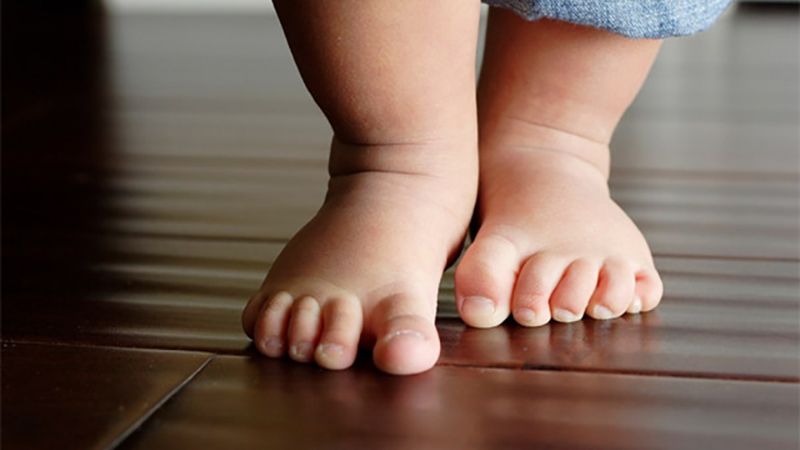
In addition to folk tips to help children learn to walk and stand quickly, mothers should combine scientific measures such as:
2.1. Supplement calcium and vitamins

Supplementing adequate nutrition is a prerequisite for a strong musculoskeletal system. Only when the baby has a strong enough skeleton, will the baby be ready to take its first steps.
Among the nutrients for the skeleton, we cannot fail to mention the trio calcium - vitamin D3 - vitamin K2:
Calcium: is the mineralizing component of bones, thickens and lengthens bones, helps increase bone density
Vitamin D3: Optimizes the absorption of calcium from food, transports calcium into the blood, promotes growth in height and bone and joint function
Vitamin K2: Supports the active transport of calcium into bones, helps strengthen bones, and prevents osteoporosis.
Children need to be supplemented with vitamin D3 and K2 from the first days after birth.
Supplementing vitamin D3 and calcium helps children walk quickly
Supplementing adequate nutrition - The foundation for bone and joint development, helping children walk and stand firmly
Moms learn more: GOLDEN nutrition helps children learn quickly go
2.1. Encourage children to walk and stand by themselves
To help children learn to walk and stand quickly, parents should gradually limit the support they provide.
The first steps of the baby will certainly be unsteady, a bit wobbly, so parents need to support them. But gradually, parents should let their children walk and stand by themselves. This will help children get used to adjusting their steps. Besides, it also creates independence for children in each step.
2.2. Create more handrails to stimulate children to stand and walk
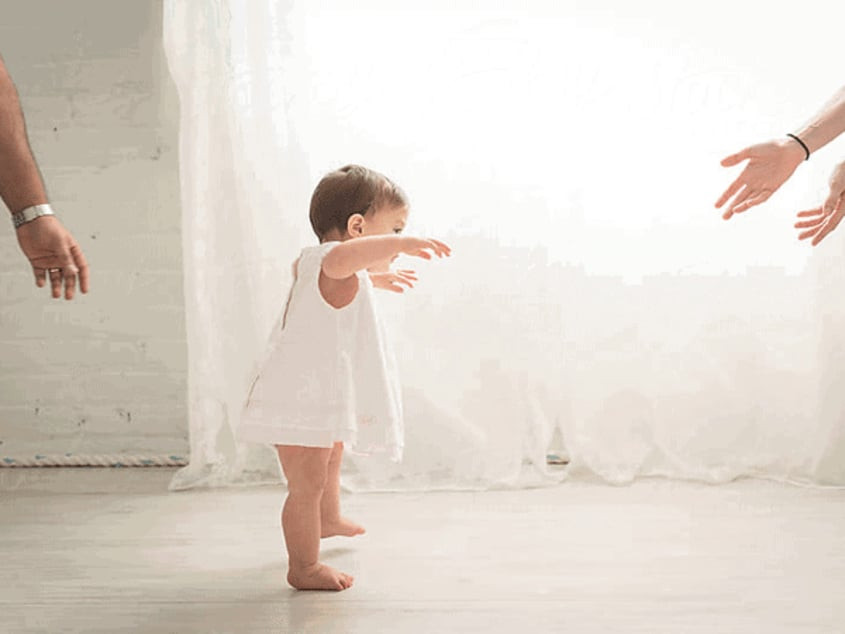
To support children in learning to walk and stand, parents should install handrails so that children have support. Parents should install handrails in open spaces, with few objects, suitable for the child's height.
Mothers teach children to hold on to the handrails and support them in the early days. Then let your baby hold on and walk and stand.
2.3. Let your baby practice walking barefoot
Tactile experiences will help your baby's brain receive information better. In the early days, you should let your baby walk barefoot on flat, soft surfaces. When your baby can walk and stand firmly, encourage him to walk on rougher surfaces, such as walking mats, on grass, on smooth sand...
2.4. Create a safe space for your baby to practice walking
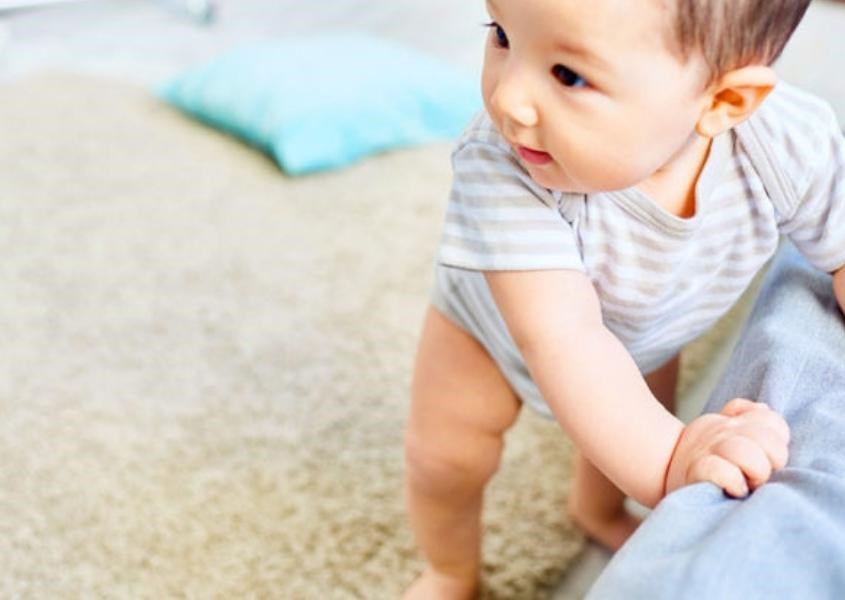
Children should practice walking in an open space. This space will stimulate exploration and prevent your baby from tripping.
Mothers should also tidy up toys, round off corners of tables and chairs to ensure your baby's safety. Flooring with foam or soft carpet also helps your baby avoid pain when falling, helping your baby reduce fear when learning to walk.
2.5. Strengthen your baby's muscles with standing and squatting exercises
[caption id="attachment_69540" align="alignnone" width="612"]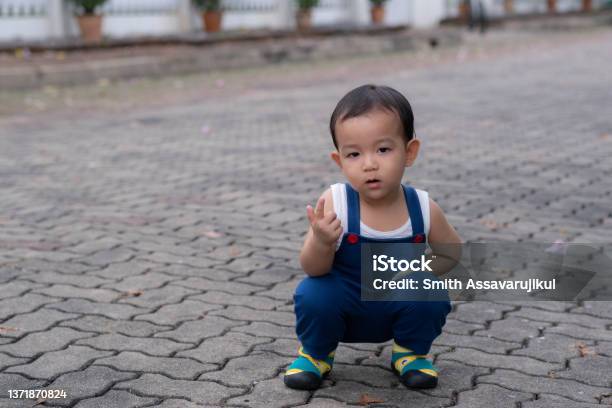 Happy Asian Little Baby Boy Smile face[/caption]
For this lesson, you need a small chair, just the right size for your baby. You will help your baby sit on the chair and stand up. You can give your baby a few toys to play with while sitting.
Happy Asian Little Baby Boy Smile face[/caption]
For this lesson, you need a small chair, just the right size for your baby. You will help your baby sit on the chair and stand up. You can give your baby a few toys to play with while sitting.
To practice standing up, you place your baby's favorite toys at different heights. This will encourage your baby to stand up and reach for the item.
Once your baby is standing firmly, you can let your baby practice walking by walking away and reaching out to hug him.
When your baby can walk on his own, let him push the walker himself.
Tips to help your baby walk quickly - walking exercises for children
Exercises to help your baby walk earlier
3. How to know if your baby is ready to walk?
Babies usually learn to walk when they are 1 year old. However, each baby is different, they can learn to walk earlier or later. Many babies can learn to walk before they are 1 year old.
If your baby shows the following signs, you can see that your baby is ready to walk:
Your baby can stand on his own without support
Your baby crawls quickly, likes to move, has good grip, and has good balance
Your baby is curious and likes to move
Your baby likes to hold, grasp, and hold onto objects to stand up
Your baby has the reflex to walk when you hold him in a standing position
At this time, you should encourage your baby to walk more, and at the same time let him practice the walking and standing exercises mentioned above.
4. Should children use a walker?
A walker is a means of support to help children take their first steps. A walker helps children maintain balance and walk more thanks to the rolling wheels.
Currently, there are two popular types of walkers:
Round walker: The child sits on the walker and pushes the foot to move the walker
Push walker: The child pushes the walker and follows
Round walker helps the child maintain balance and avoid falling. However, this type of walker should not be used for a long time because it can make the child dependent on the walker. Mothers should also not let their children sit in a walker too early to avoid bowlegged syndrome.
Push walker helps children be more proactive in moving, and is the type of walker recommended for children to practice walking. However, during the walking process, children can easily fall. Therefore, mothers should prepare extra cushions and hats for their children to practice walking.